My starting point was Stonepenge. This will be the case for all of these journeys. Why? Mostly because it’s near my flat. It’s not just that though, there’s also a symbolism engineered into it, which brings us to the next question – what the hell is Stonepenge? It’s a piece of 1960s brutalist sculpture at the centre of Crystal Palace Park, formed of three concrete megaliths and a series of smaller slabs surrounding it. With its location not far from Penge, combined with its Ernő Goldfinger impression of a certain prehistoric monument, the nickname was born.
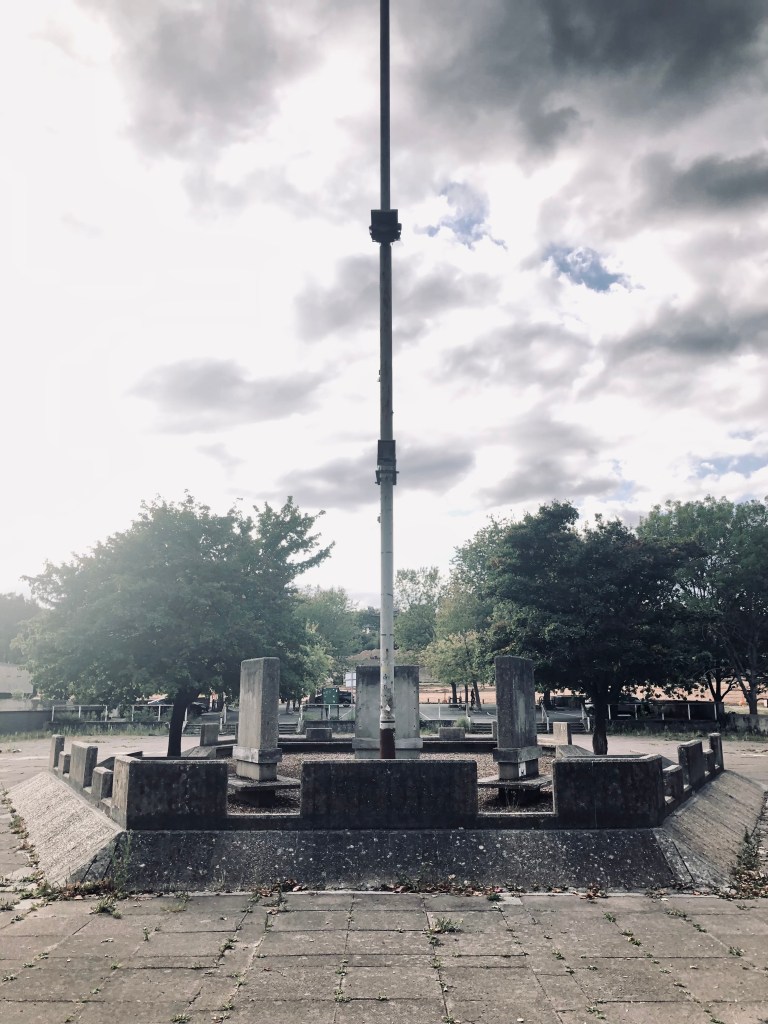
The forced significance of me starting at this location is that the actual Stonehenge is believed to be a major nexus where numerous ley lines converge. Theory suggests that Stonehenge was constructed at its location on Salisbury Plain to harness its “earth energy”. Then in 1925 Alfred Watkins wrote a book called The Old Straight Track, popularising the modern concept of ley lines – hypothetical, invisible lines thought to connect significant ancient sites across a landscape.
Watkins visualised his own local Hereford landscape as a grid of straight lines connecting up sites such as churches, burial mounds and stone circles, theorising that pre-Roman inhabitants of Britain would travel in straight lines, in spite of rivers, hills and other obstacles that might lie in their path, as this was the quickest route to anywhere.
In my personal version of ley lines, I’m spiritually connecting Stonepenge with gigs I quite fancy going to. For each journey I will map out the most direct route between the two without trespassing. The reality of this often means zigzagging through grids of residential streets, cutting through industrial estates, or utilising odd footpaths, where you’d otherwise cruise down a main street for maximum momentum.
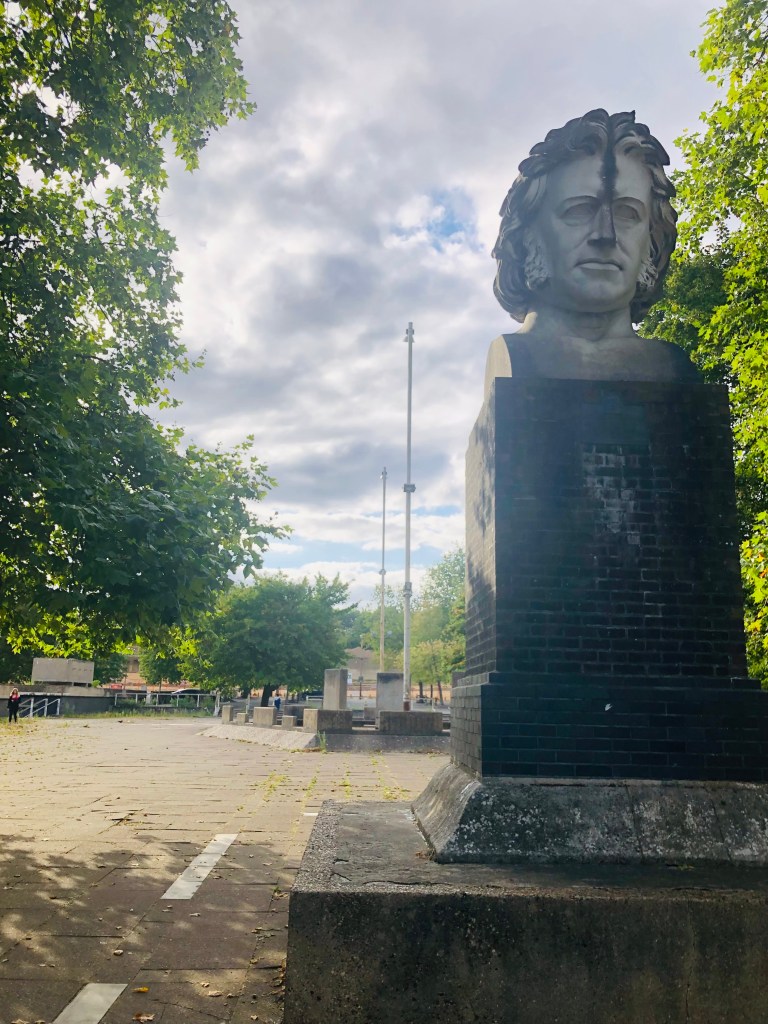
So here I was in August 2025, standing in the centre of Stonepenge, harnessing the earth energy and spiritual geometry between music and sculpture, but mainly just loading up Google Maps. I was off to see some twangy, scratchy and intelligent 80s indie in the form of The Monochrome Set at legendary South London venue The Windmill in Brixton. It was billed as a work in progress show for their forthcoming album.
I headed north through the park, looking out across the ripped up Italian terrace, once the opulent grounds of the actual Crystal Palace, before it burnt down in 1936, but now reduced to further rubble as part of the current regeneration of the park. As such, temporary fences enclose the headless Dante statue. New monuments erupt from the scrambled earth, in the form of bollards, which machines have dug around, so they now appear as ancient sarsen monoliths. A discarded bottle of Magnum Tonic Wine confirmed the presence of the temporary music venue for the South Facing festival. I trudged to the top of the hill, looked southwards into the distance, then carried on out the park through a forest of Buddleia and past the ruined aquarium of the Crystal Palace.
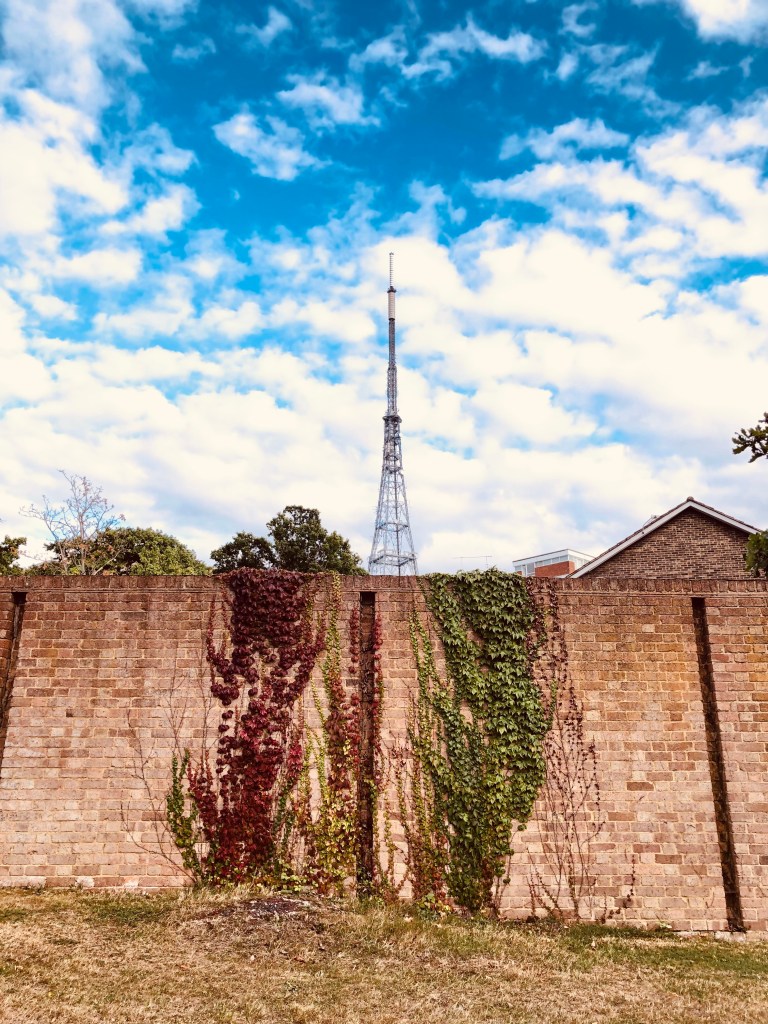
I turned into College Road and descended the hill, with a hard shoulder of crunchy golden leaves to my left, a sign that autumn was near. The trees retained the majority of their leaves, most evident in what I’ve since learnt is a Southern Catalpa tree, flaunting its huge spade-like foliage. The trio of redwoods on Gipsy Hill roundabout were smug in their evergreenness, their form like perfectly conical lego trees. These ones are relatively small, but the world’s tallest living organism is a type of redwood – a coast redwood (Sequoia sempervirens) in California’s Redwood National Park. It’s 116 meters tall. That’s the size of a 100 meter racing track standing on its end and then something 16 meters tall on top of that. It’s huge.
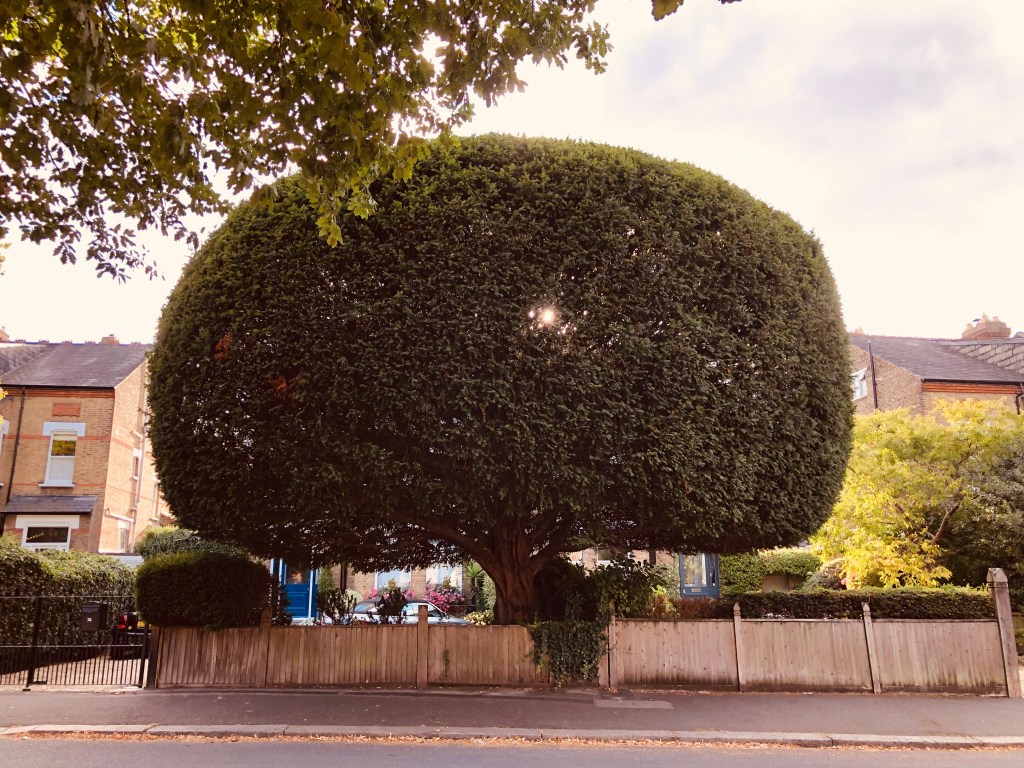
A man pissed onto a nearby fence, yards from the busy junction, shading part of a wooden fence a darker hue. I’d been thinking a lot about pissing in public lately. This was the third time in as many months I’d seen a man relieving himself in broad daylight; one in the housing estate I live in and another against his own car wheel. I suppose it must be difficult for certain professions – taxi drivers etc. I’d just argue that a bit more secrecy should be considered. I guess if I were to do it anywhere, it might be on the expensive houses of Alleyn Road. These taunt you as you pass them. I admire some of the Arts and Crafts stylings at the south end of the street, but they tell me to fuck off as I do. The biggest display of grandeur on Alleyn Road is the big bastard topiary tree that erupts from a front garden, looking like a cosmic piney space shuttle. I notice the lavender and take a hit of the scent. My nostrils are pleasantly surprised that it’s genuine on this occasion, not synthetic, as is more frequently the case. The bees agree with me.
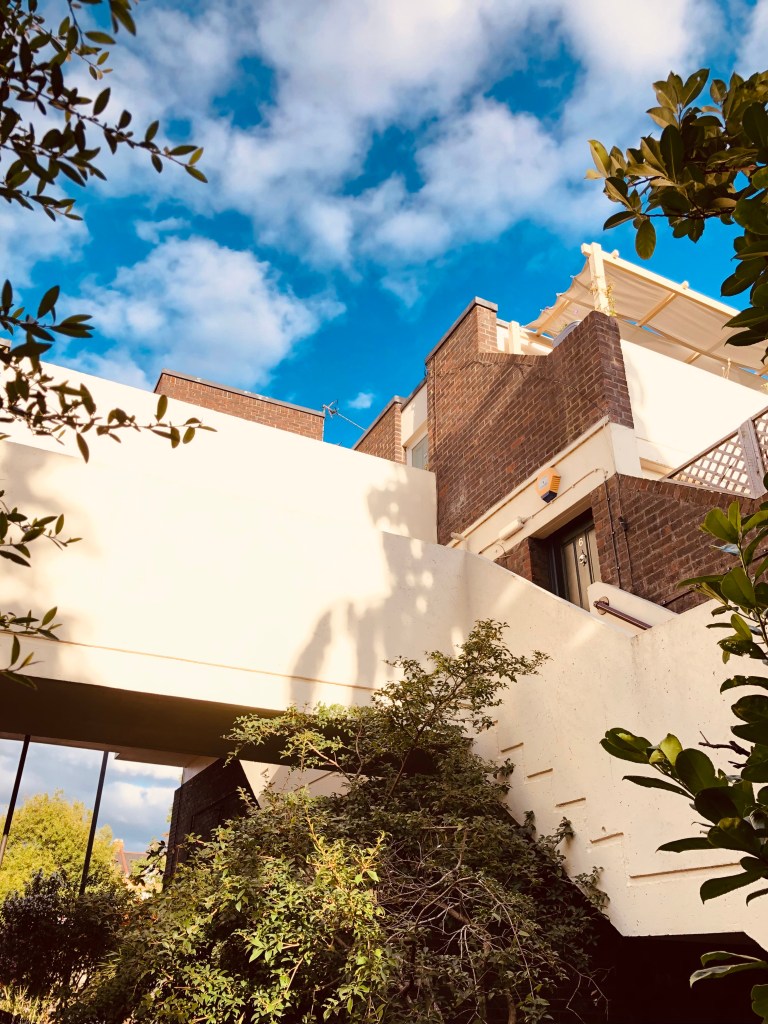
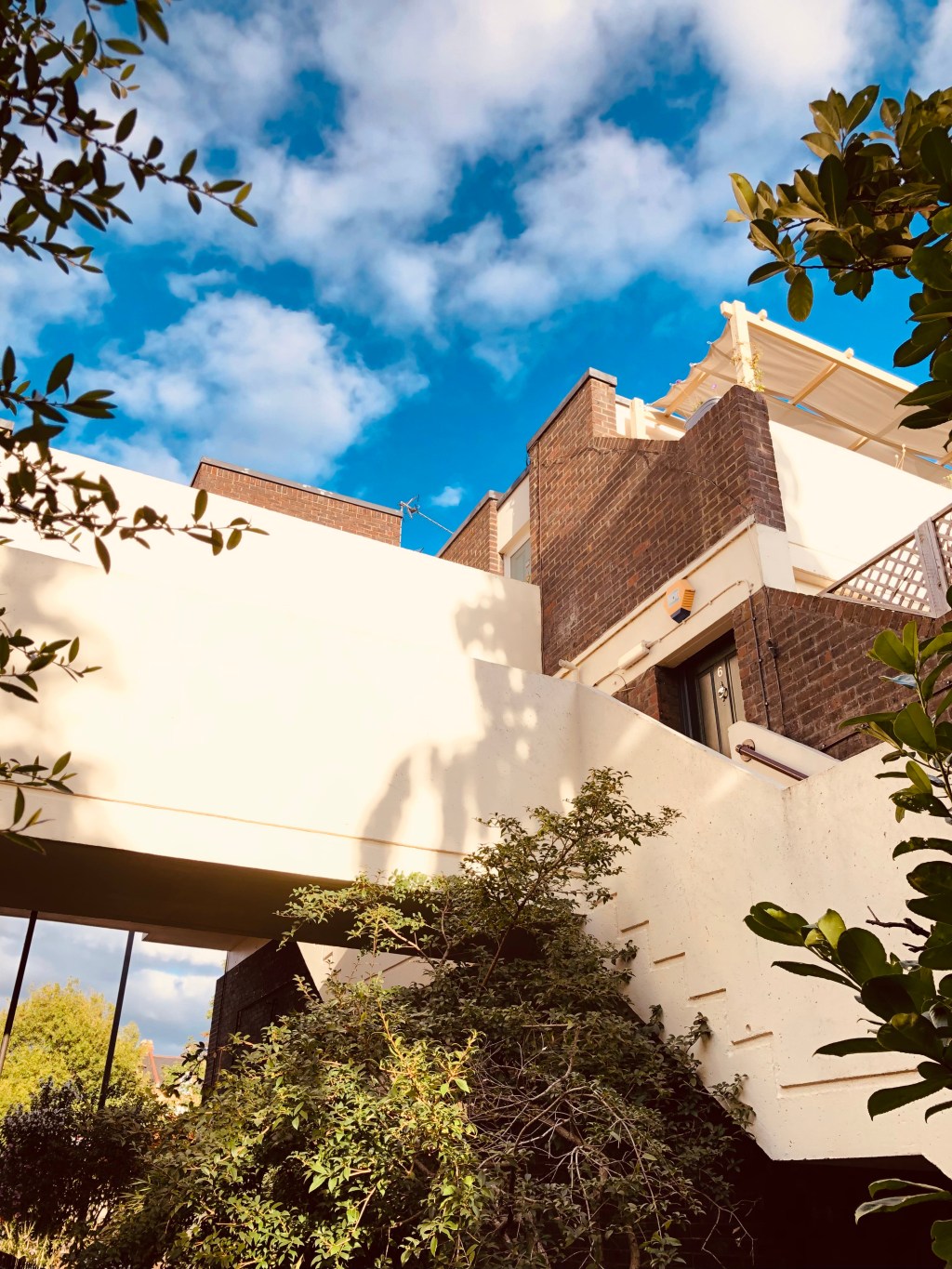
Clive Passage was a brief respite from the showy semi-detached houses. The walkway pierces through a modernist housing estate that cuts a fine geometric figure against the blue evening sky. In the grounds of Emmanuel House, dense greenery casts decorative shadows across sloping brickwork and suspended walkways. It was peaceful, which in itself is an incredible architectural feat given its position in the heart of gas guzzler district. This is no accident, given architect Moshe Safdie’s inspiration – the Habitat 67 development on the Saint Lawrence River, Montreal. Habitat 67 is an Escher painting of prefabricated concrete forms, jutting out at impossible angles to astound onlookers, as well as enhance privacy in each home, much like Kate Macintosh’s Dawson’s Heights in East Dulwich.
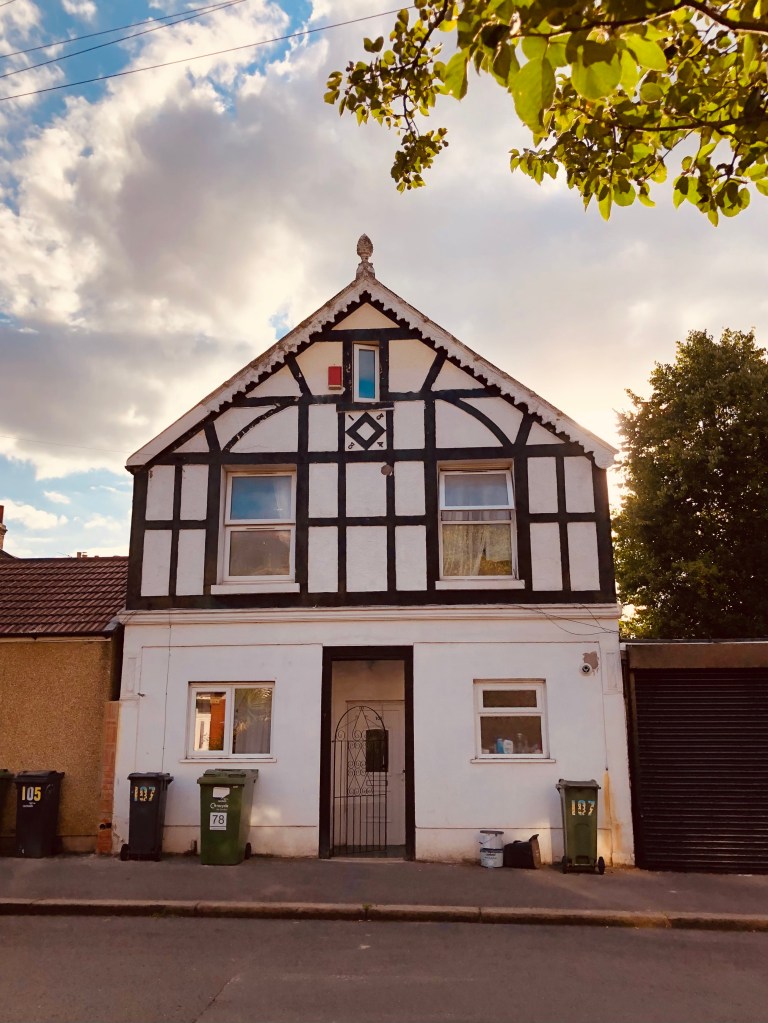
I was spat back out into South Croxted Road where sports cars reluctantly stopped at pedestrian crossings, chrome almost brushing my heels as I’m barely at the curb. I cut through to Clive Road, which presented a couple of interesting houses, the first a symmetrical mock Tudor number and the second all crenelation, gothic motifs and late Victorian decorative flourish.
Entering Clive Road meant I had now breached the London Borough of Lambeth. This is pertinent for this walk as The Monochrome Set are very much a Lambeth band. They even have a song called ‘I love Lambeth’, though the lyrics make clear their level of sincerity:
“I love Lambeth
With all the dirt on the streets
There’s no better place for your feet
If you were a beetle
Or if you were a tsetse fly
This would be heaven”
Then I arrived at the first pub directly on my line. The Stonepenge to Brixton Windmill ley line cuts directly through the north eastern corner of The Rosendale, precisely where the gents toilets are in fact. I pondered the significance of that, which came to nothing.
The Rosendale feels appropriate for the area. It’s very much a gastro pub. The ratio of restaurant area to pub area is skewed in favour of those looking for a sit down meal, as opposed to reading a paper in the corner with some Scampi Fries. When an orderly single file queue formed at the bar, I knew this pub wasn’t really designed for me. Its saving grace was the Harvey’s Sussex Best handpump, further improved by the barman’s revelation that it was a fresh barrel.
I took my pint to the front garden and gazed out onto the junction. To my right the lime green pinnate leaves of a false acacia dazzled against the Gipsy Hill Telephone Exchange building, with its contrasting rusty brown industrial art deco stylings.
A woman crossed the road from the Telephone Exchange, pulling a pink suitcase at a speed that rendered the wheels useless, subjecting them to a dragging. My gaze followed the suitcase across the road, so that I was now looking diagonally across the junction as I sipped my pint. Here stood two houses, side-by-side, with significant – yet by no means famous – former residents. At number 30 Park Hall Road once lived a woman who helped alter the course of commercial advertising, while number 32 was once home to the man who invented the first plastic.
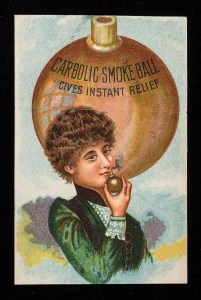
I should probably elaborate on the advertising thing. Basically, to tackle influenza, in 1891 a company released a product called a Carbolic Smoke Ball and promised financial reward if it didn’t work. The reward was £100 for anyone who used the Carbolic Smoke Ball three times a day for two weeks and still caught the flu.
I should probably also elaborate on what the Carbolic Smoke Ball actually was. It was essentially a ball filled with powdered carbolic acid and a funnel for the user to inhale the acid vapour up their schnoz, which I don’t know about you, but I see no issue with.
Louisa Carlill, whilst living at 30 Park Hall Road, saw the ad and purchased one. She used it for two weeks and then, unfortunately, got the flu. With her eyes firmly on the prize, she remembered the claim in the advert and proceeded to sue the Carbolic Smoke Ball Company.
How did the company respond? They said that due to their confidence in the product, Mrs Carlill needed to visit their office every day for two weeks, whack the tube up her beak, squeeze the ball and inhale the carbolic acid under the watchful eye of their secretary, to be certain she was using it correctly.
Mrs Carlill went, essentially, fuck that. Her husband was a solicitor, so she took them to court instead.
Now here’s where we get into some proper legal terminology. The verdict of the Carlill v Carbolic Smoke Ball case hinged heavily on whether the statement made in the advertisement could be considered “mere puffery”.
I should probably elaborate on the term ‘puffery’. Regardless of whether or not this was a tongue-in-cheek nod to the vapour of the smoke ball, this seems to be genuine legal terminology associated with advertising. It means something that is knowingly inflated and generally acknowledged to be not entirely true – a sort of hyperbole. Pepsi for example, claimed puffery in 1999 when jokingly implying in an advert that as part of a loyalty program, seven million Pepsi Points could be traded for a vertical take off jet aircraft. Some bloke worked out that it was cheaper to obtain the jet via Pepsi loyalty points than actual money and eventually presented Pepsico with the attempted purchase. In this case, Pepsico got off lightly in court and were not sued, however they did have to amend the advert to have a “just kidding” disclaimer, perhaps a legacy of the great Louisa Carlill of 30 Park Hall Road.
The result of the Carlill v Carbolic Smoke Ball case ended in the Carbolic Smoke Ball Company having to pay the £100, because the conclusion was made that the offer in the advertisement constituted a binding contract. This is important, as essentially it meant that in publishing the advert, they were opening themselves up to an unlimited number of contracts with whoever happened to accept their terms. The legacy of this case was that from this point on, companies had to be much more careful in making such empty promises, no matter how obviously ridiculous they might be. Put another way, one could no longer simply hide behind mere puffery.
How did it all end for the Carbolic Smoke Ball Company? They went bankrupt. Their business model never recovered from the revelation that carbolic acid causes chemical burns.
Perhaps the plastic story ends better.
Alexander Parkes, sometimes dubbed ‘the father of plastics’, started out as a metal worker, but always showed creativity and was continually patenting new inventions. His most notable achievement was his invention of ‘Parkesine’, a semi-synthetic mouldable plastic, which was exhibited at the 1862 International Exhibition in Hyde Park in the form of household items, such as buttons and combs.
Unfortunately for him though, in a similar fate to the Carbolic Smoke Ball Company, Parkesine was discovered to be highly combustible, and on top of this, Parkes turned out to be a shit businessman, so he ended up going bankrupt. To make matters worse, his invention was later refined by an American company, who increased the product’s malleability by adding camphor and renamed the product ‘celluloid’ in 1870, which as we all know, did pretty well. It became the material that allowed ordinary people to escape their daily lives into fictionalised worlds.
I looked further into celluloids, and plastics in general, discovering that the labelling of something as a plastic isn’t completely black and white. In my research I lost myself in a black hole of polymers, molecules and ancient Mexicans playing with rubber balls. As it turns out, a lot of wood is actually cellulose, but the important point here is that Parkesine was the first man-made, semi-synthetic plastic material that could be moulded when heated and retained its shape when cooled, paving the way for the modern plastics industry.
The first fully synthetic plastic was invented in 1907 in the shape of Bakelite – the first plastic not derived from plants or animals, but instead coming from fossil fuels. Fast forward a hundred years and microplastics are now found in our blood, semen, breast milk, bone marrow and even in our brains. Lovely stuff.
Anyway, my pint of Sussex Best was empty. I did a wee along a made up ley line and got on my way.
I walked up Rosendale Road and turned left at the hairdressers where a few years ago I got my second Covid vaccine, which I believe was much safer than a ball filled with dangerous acid. I snaked through residential streets, noticing the popularity of wooden shutters. You’d be hard pushed to find a net curtain in West Dulwich.
I reached the South Circular Road, right by a school where in 2023 the ceiling collapsed, injuring 15 children and a teacher. It had a sign saying ‘Independent prep school of the year’. I wondered whether structural integrity featured anywhere in the Ofsted criteria.
I passed under a railway bridge and clocked one of those private Network Rail staircases that give engineers a direct route to the tracks. I fantasise about having access to these. A front garden contained fake plants on an astroturf lawn, a polymer paradise that Alexander Parkes would have been proud of.
This garden was ironically placed right behind the South London Botanical Institute (SLBI), which unless you were a horticultural enthusiast based in the Tulse Hill area, you would walk past without noticing. Before my journey, I discovered that this institute for plant study was accessible to members only, except for an infrequent programme of public events. Clicking through to the events page it just so happened that one of these sporadic open days coincided with me walking to The Monochrome Set gig. I say open day, it was an open two hours, but those two hours neatly aligned with the narrow window I’d be passing in, so I slipped into what appeared to be just a lovely big Victorian house.
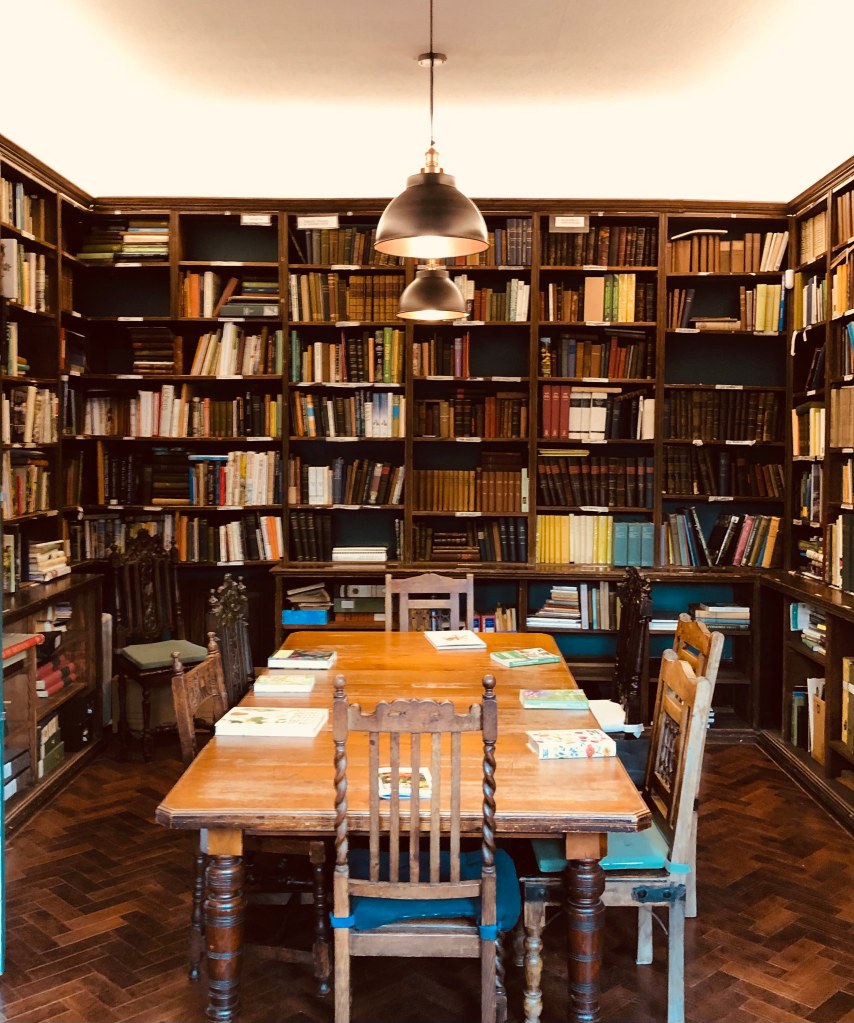
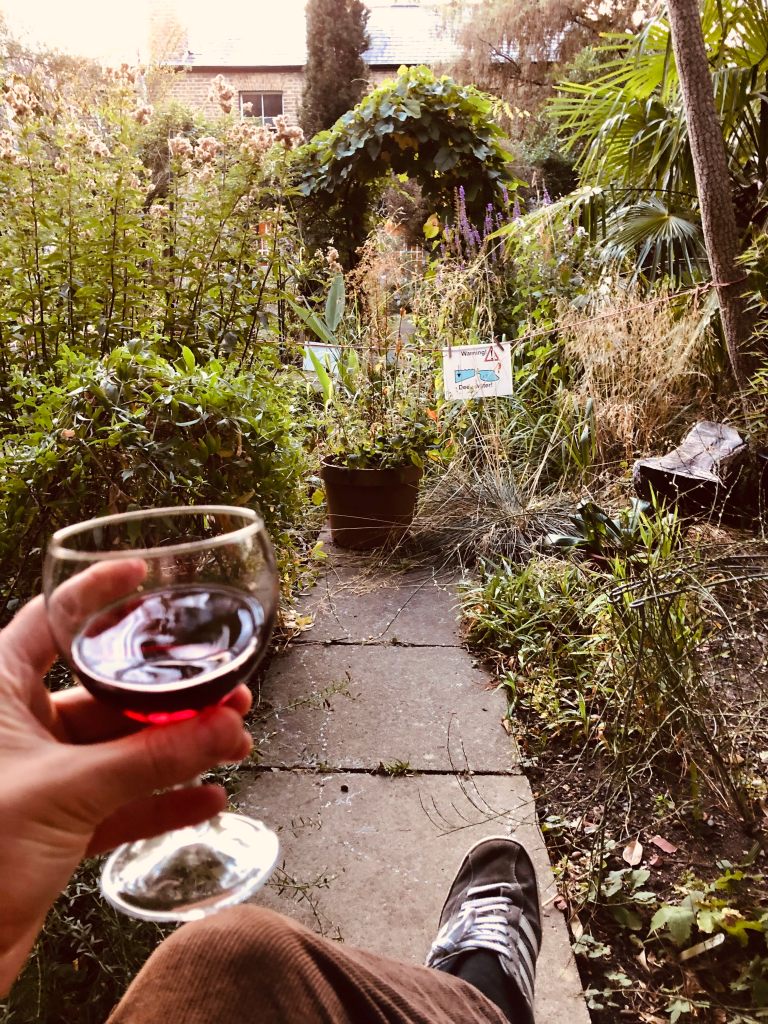
I was glad I did. This is a hidden gem. In the time I was there I managed to pack a fair amount in, including; perusing the reading room unaccompanied as if it was my own house, eavesdropping on a corridor chat about the institute’s history, pouring myself a shiraz, whacking some chalky white cheese onto a cracker, eating the cheese at the end of the garden by the pond, chatting to a woman painting some flowers, exploring the herbarium and using some microscopes. I looked really bloody closely at a leaf, poppy seeds and peppercorns, the latter of which appeared like tiny moons with craters and coarse sooty terrain. It was a pleasant sanctuary in the heart of south London, just off a busy South Circular junction.
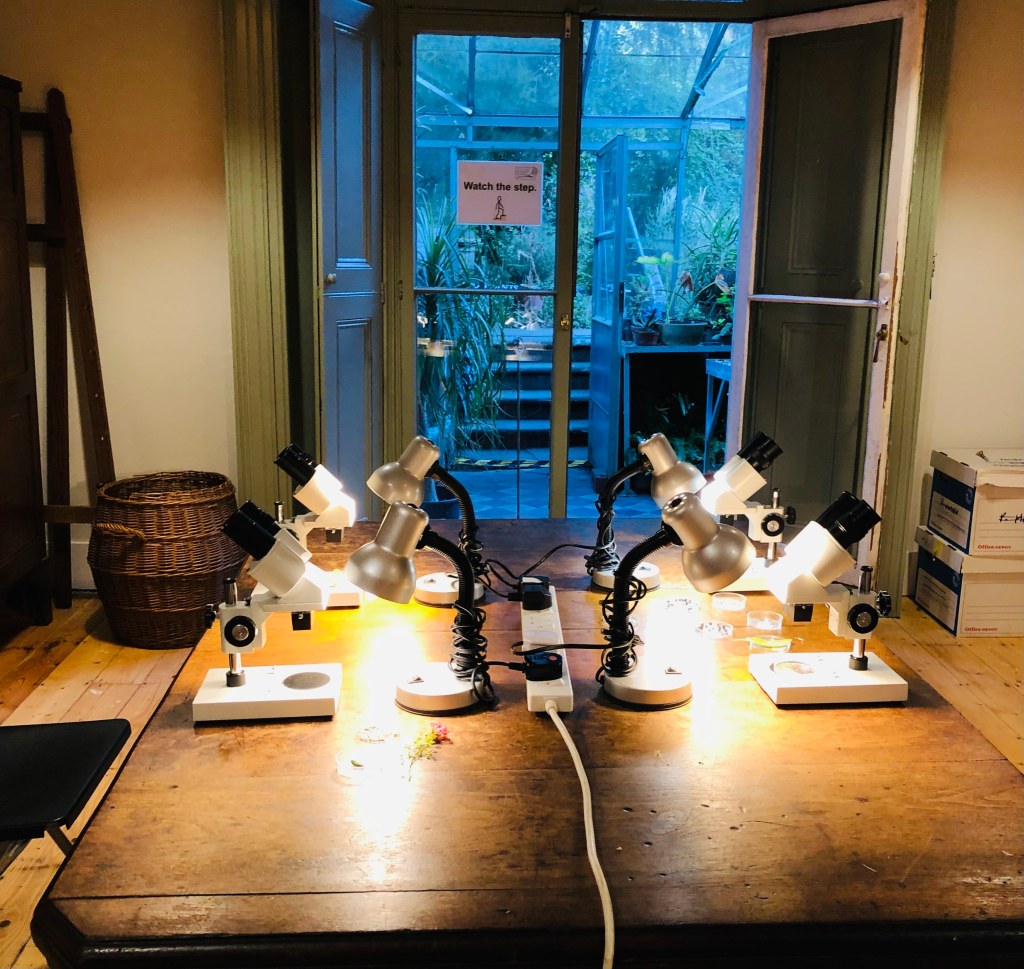
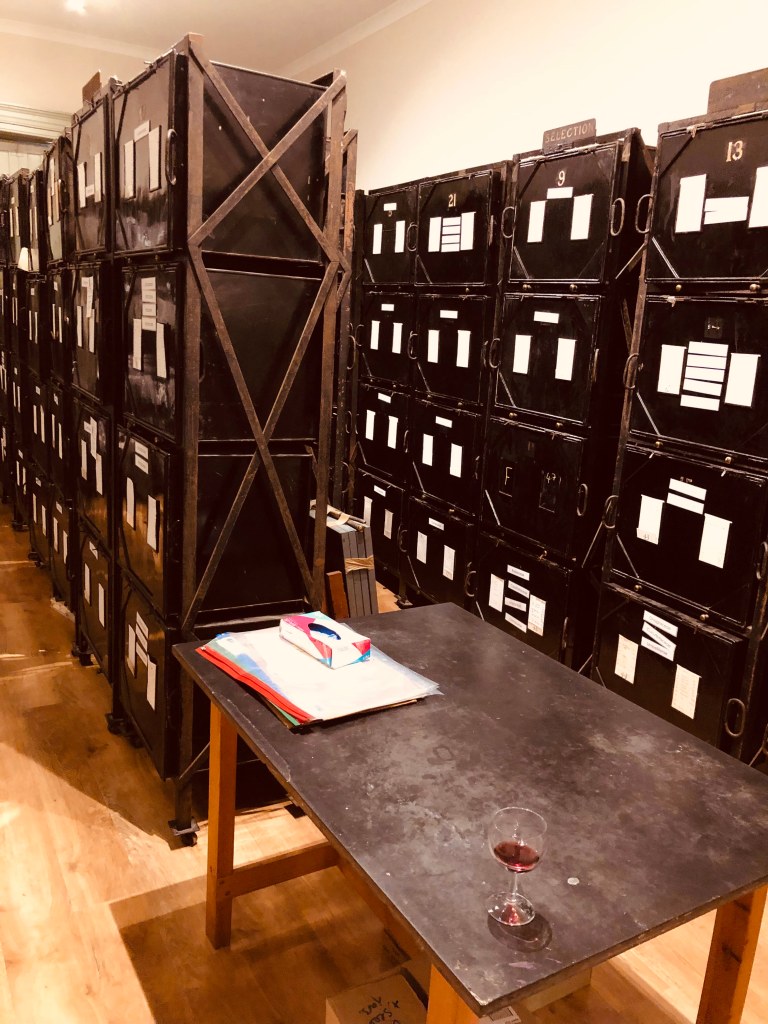
The SLBI exists because one man’s book about birds was destroyed. Founder Allan Octavian Hume was originally more into ornithology and is responsible for the largest single donation of birds to the Natural History Museum. However, the manuscript for his magnum opus, Birds of the British Indian Empire, was chucked in the bin by a supposedly discontented house servant in 1885. To rub salt in the wound, a landslip damaged his personal museum of specimens. Quite understandably, he couldn’t really recover from that and just switched to plants instead.
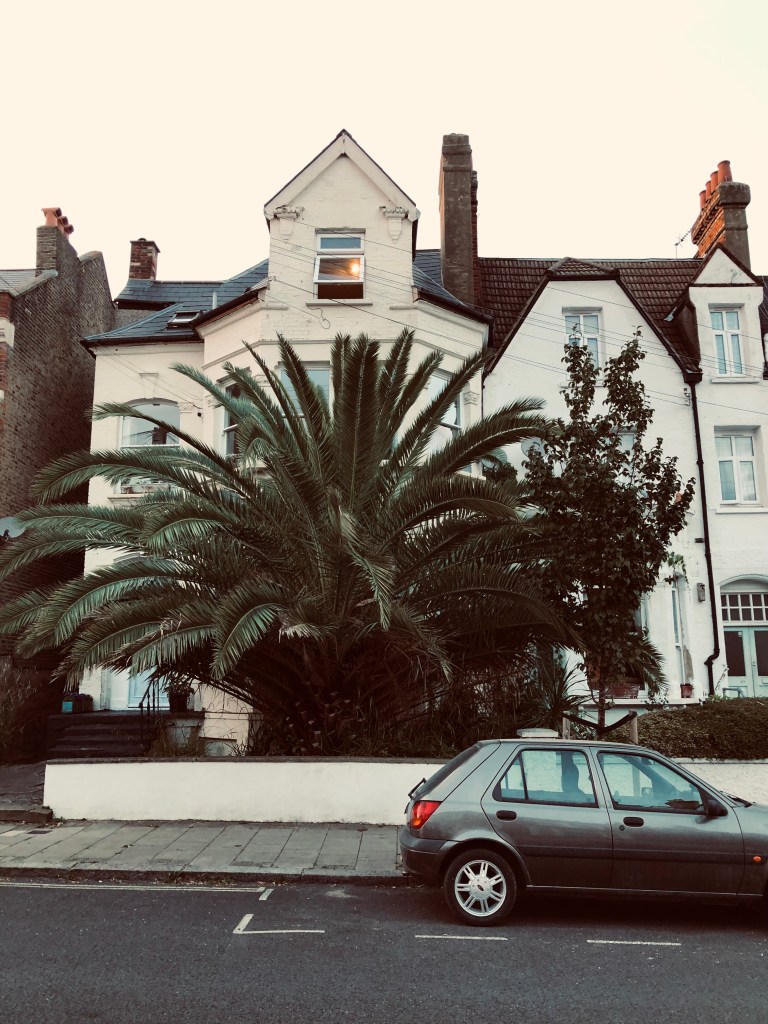
I left the SLBI and turned onto Deronda Road, where a stack of dinner plates sat on a wall next to a huge palm tree, which, buoyed by my botanical experience a moment ago, I was keen to identify. It was a Canary Island date palm (I reckon) – an exotic anomaly lurching over Lambeth Council wheelie bins. This is the street referenced in the Elbow song “On Deronda Road”, which in an interview Guy Garvey explained to have come about on frequent bus rides, where Deronda Road was one of the announced stops. This struck me as a familiar experience as a frequent rider of London buses – all those names that become lodged in your head through hypnotic repetition of that woman’s voice.
This in turn reminded me of a story I once read about voices of the London Underground. Not the heartwarming one about the wife of the “mind the gap” announcer, who found the voice a comfort after his death. I mean the one I read about in Craig Taylor’s excellent Londoners book, where voice actor Emma Clarke recounts the grittier details of being the voice of the tube. She broke up with her boyfriend not long after, who was unable to move on from her, haunted as he was by her constant vocal presence whenever he traversed the city.
She also spoke of the rigmarole of how they were going to pronounce Marylebone and how each tube line had to have a sense of sonic continuity – an audio through-line. She also recalls struggling to find the emotional sweet spot for delivering the bad news of: “this train will not stop at….”
I was approaching Brockwell Park. I entered the park at its most southerly point and was greeted by a view of the sun setting over the City of London. It was a stunning sight, made all the more impactful by the element of surprise. Often when you encounter a view of the London skyline, you’ve gone there for that exact purpose, whether it’s Parliament Hill or Greenwich Park. It’s much more breathtaking when witnessed out of the blue, like when glimpsed between roads at Crystal Palace triangle, or at the peak of Kirkdale as you head down towards the Horniman Museum.
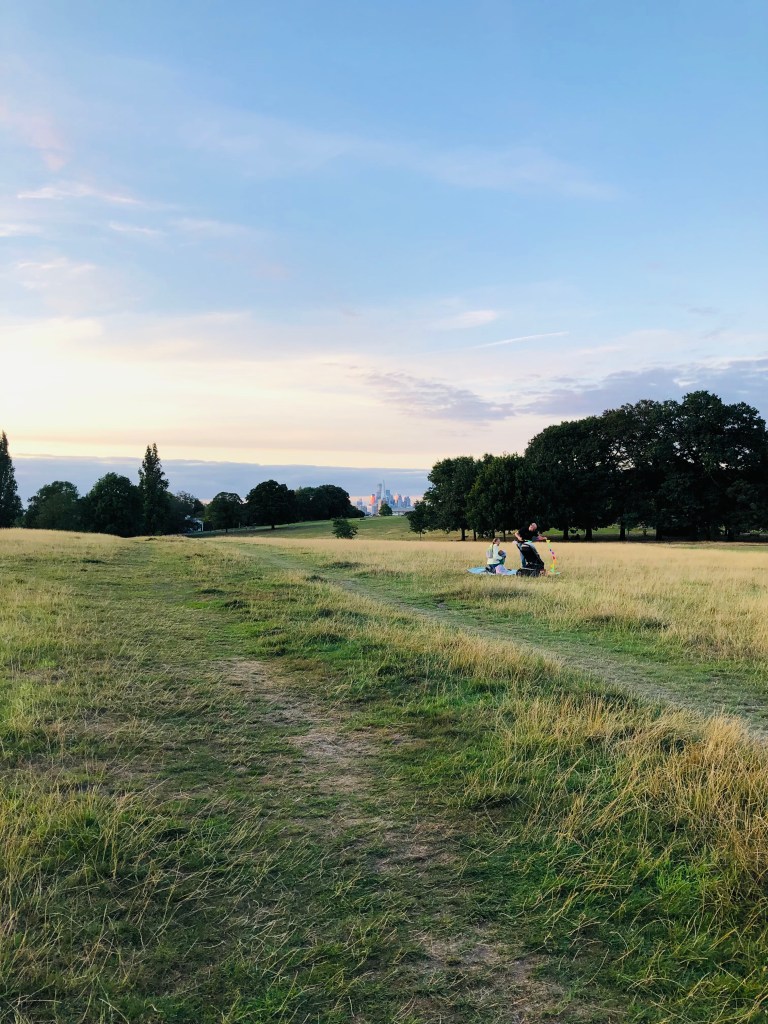
It was a part of Brockwell Park I’d never been to. If it didn’t fall on the Stonepenge to Windmill line I might never have seen this view. I cut through the long grass to honour the line. My eyes were fixed to my right taking in the sight of the Shard and the Gherkin framed by oak trees under an orange and purple sky. I walked past a woman quite rightly getting stoned under a young conifer. I cut across the south west corner of the park and into the Cressingham Gardens estate.
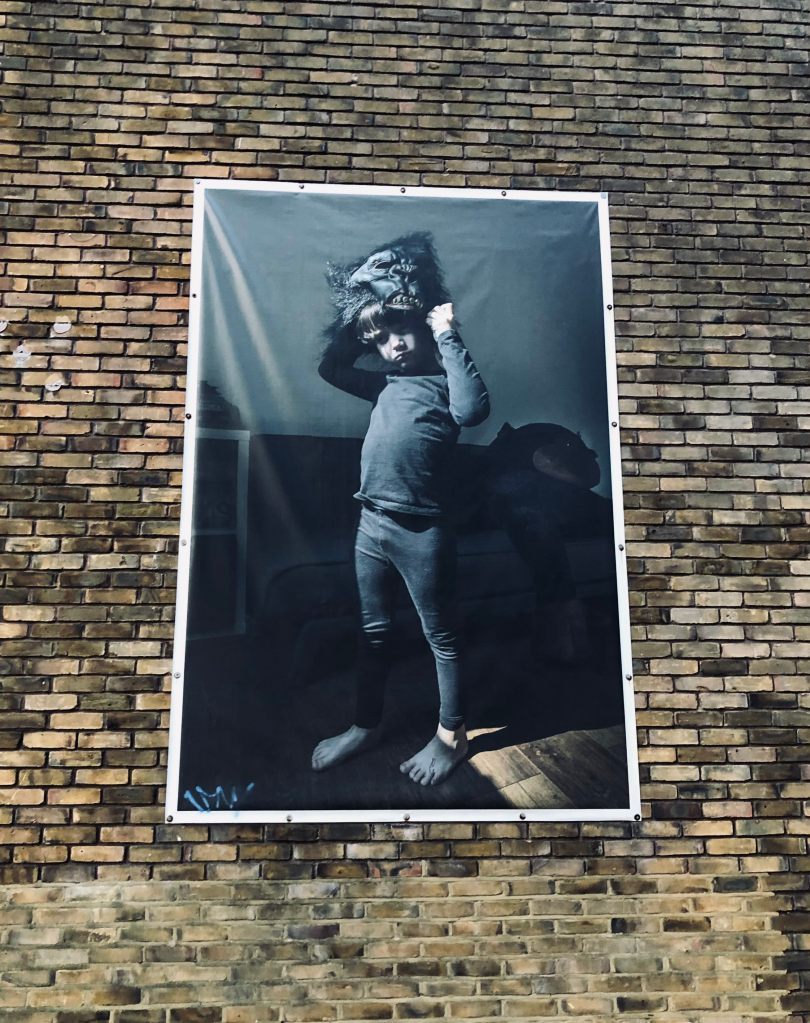
As I walked through the estate, I was struck by two large images hung up against the brickwork, one of a woman sitting on an unmade bed, a beam of sunlight across her closed eyes, the other of a boy in his pyjamas either putting on or removing a gorilla mask. A sign near the latter read ‘Sanctum Ephemeral’ by Mark Aitken. This turned out to be a permanent photography installation from a resident of Cressingham Gardens, in response to Lambeth Council’s plans to demolish the 306-home estate. This was announced back in 2012 and has been an ongoing contest between Council and residents that is still being fought to this day.
As part of the project, Aitken visited his neighbours, chatted with them and took their portraits. Sanctum Ephemeral humanises the people of Cressingham Gardens. Councils and developers can be guilty of viewing residents as mere jigsaw pieces in their urban planning puzzle. The word ‘home’ is substituted for the more depersonalised ‘unit’, a helpful device to ensure human rights are not at the forefront of minds.
Cressingham Gardens was built by the Lambeth Borough Architects’ Department between 1967 and 1979 and is notable for its careful consideration of the landscape it inhabits. It uses the gentle undulations and trees spilling over from Brockwell Park to its advantage, retaining pockets of green space for its residents to enjoy. The variation of dwellings works in tandem with the topography to ensure manmade structures don’t project above the tree line, whilst natural daylight into homes is maximised via large windows, vertical skylights and careful mathematics.
Across the road from the boy with the gorilla mask is the bus stop where Jean Charles Menezes boarded the number 2 bus on the 22nd July 2005, followed by several plainclothes police officers. This was the beginning of the operation that led to him being shot seven times in the head on a tube carriage at Stockwell Station, mistaken for a terrorist involved in the 7/7 bombings. For a short stretch of this walk I was in sync with the route of that fateful journey.
I took a left through another Lambeth housing estate towards my second pub of the journey. It was a pub I’d never been to before – the Elm Park Tavern. If I may use some recently acquired architectural terminology, I was greeted by a pub where stucco pilasters supported a fascia with a dentillated cornice. Whilst fancier now, apparently this used to be a proper Brixton boozer. I couldn’t find much evidence of how it used to be, so I’m relying on an anonymous blog comment where someone recalls a quizmaster who dressed up as Obi-Wan Kenobi, and would mainly mumble through his hood, slagging off the questions and people in the bar, which included a regular team called Not Muffdivers For Satan.
I walked through the delightful canted corner entrance. It was pleasant, quiet and fairly lacking in soul. I yearned for Kenobi.
Continuing on, I passed through another low-rise estate with a pedestrian focused courtyard house layout. This development on Virginia Walk won a Ministry of Local Government Housing award in 1971, rewarded for its elegant planning, including each dwelling having either a patio garden or a terrace at the upper level. Surrounded by Victorian and Edwardian housing, it looks to have been built on the site where in June 1944 a V-1 flying bomb destroyed 12 houses at the South East end of Beechdale Road.
The final stretch of my walk saw me striding excitedly up Blenheim Gardens, a common ritual over the years as I’ve headed on countless occasions to this oddly placed venue. The Brixton Windmill has a fascinating history which is a whole other story, but to outline some top level notes, it’s a flat roofed pub, once the dedicated local for the Blenheim Gardens Estate that still sits next to it. It then dawned on me that the ley line I walked that day to the Windmill told a recurring story. By the time I had reached the venue, I had traipsed through a series of thoughtfully designed modernist housing estates built to encourage community. I had cut through Emmanuel House, Cressingham Gardens and Virginia Walk to reach a music venue originally built to give neighbours a place to come together and get to know each other. The Windmill still has that effect, just in a different guise. It’s the only music venue where I regularly end up chatting to people I don’t know.
Another notable point is the ‘roof dogs’. Over the years the venue has owned a series of dogs that make use of the flat roof to stare down at those wishing to enter. As I enter that day, the first thing I notice is the old school ticketing system. No need for QR codes here, it’s a familiar face sitting at a table with a list of names and a stamp.
I got in not long before The Monochrome Set were on. In fact, they were already technically ‘on’, they were just setting up. The Windmill doesn’t have a backstage room or anywhere to walk on from, other than just through the crowd, which feels normal for small local bands, but whenever a bigger name comes to the Windmill it always feels like a charming feature. The band I’m in have played there numerous times and it feels humbling to witness The Monochrome Set going through the same rituals as our unknown outfit, plugging themselves in, tuning up, failing to get sound, leaning over to the sound engineer, uncoiling leads, adjusting dodgy mic stands and glancing awkwardly at the crowd occasionally, who are watching them as if setting up is some kind of pre-show entertainment.
When they got going it was classic thumb over the neck shuffley chords, heavy phasers and sardonic storytelling. They played a new collection of songs, eight of which singer “Bid” claimed had a connected narrative based on a nightmare he had and a ninth was about locking your nightmares up in cages in the attic whilst you play the theremin to them to stop them from bothering you.
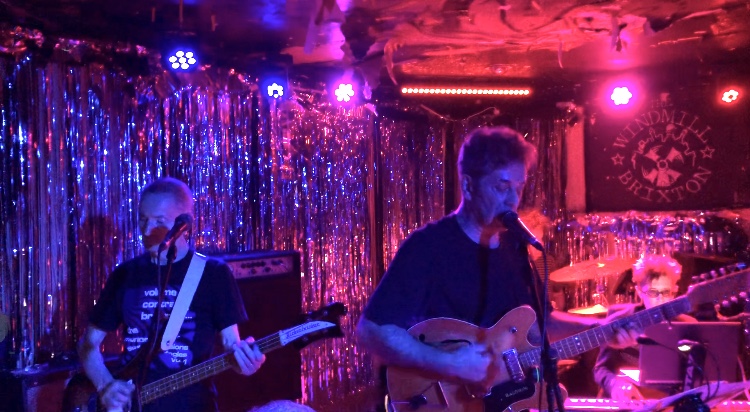
It was raw and obviously a work in progress. It’s always refreshing to see an unpolished set where failed song intros are restarted and band members share confused glances over mistakes the crowd won’t have noticed. The Monochrome Set have always struck me as having a delightfully skittish energy. There’s an organic excitability to the fidgety rhythm guitar that feels like the music might combust at any moment. They’re like the indie Parkesine, or a Carbolic Smoke Ball of volatile post punk.
They finished with a few classics, with Jet Set Junta in particular getting the room pogo-ing. The crowd was a real mix of 6 Music Dads and youngsters who wouldn’t have been born when the band first reformed, let alone started. It was great to witness their enduring appeal.
After the gig I took my pint outside to finish it. I sat and reflected on the day, including the connection I’d made earlier between them setting up in front of everyone and my experience doing the same at the Windmill. Just as I was doing so, I picked up my empty glass and walked back in. As I did, singer Bid walked past me and up to his wife. He greeted her with a simple: “was that alright?”.
That three word phrase uttered to a partner after coming off stage brought me infinitely closer to The Monochrome Set. Any distance between us completely evaporated in a single moment.
“Yes”, she replied. “You were great”.


Leave a Reply